

 Medically reviewed by Dr. Gagan Sidhu, DDS · Updated Nov 3, 2026
Written and medically reviewed by Dr. Gagan Sidhu, DDS, general dentist at One Dental Place in Fresno, CA.
If you are trying to work out the dentist visit cost without insurance in Fresno, the honest answer is that it depends on what the visit includes. A first visit is usually an exam, a set of X-rays, and a cleaning, and each of those can vary. The good news is that you can find out what yours will involve before you sit in the chair, and you should never be surprised by the bill afterward.
This guide explains what goes into a typical visit, what makes one visit cost more than another, and how uninsured patients in Fresno, Clovis and the 93720 area keep dental care manageable. If you are already sure you want to book, our page on seeing a dentist in Fresno without insurance covers your options in one place.
The short answer: what one visit usually includes
A standard first visit without insurance usually has three parts: a full exam by the dentist, X-rays, and a professional cleaning. Some offices bundle these together for new patients, and some price each one separately. Either way, those three pieces are what most of the bill is made of.
For returning patients, a routine check-up is often lighter. You may not need a full set of X-rays every time, and the exam is usually shorter because the dentist already knows your history.
What pushes a visit beyond that baseline is usually one of these:
- You need a different type of cleaning than a routine one
- You need extra X-rays to look at a specific tooth
- The dentist finds a problem that needs treatment
- You came in because something hurts, not for a check-up
None of those should happen without you being told first. If you want to see exactly what a first visit includes at our office, here is what a first visit includes for new patients.
Exam, X-rays and cleaning: what each part is for
Each part of a visit does a different job, and knowing why it is there makes the bill easier to understand.
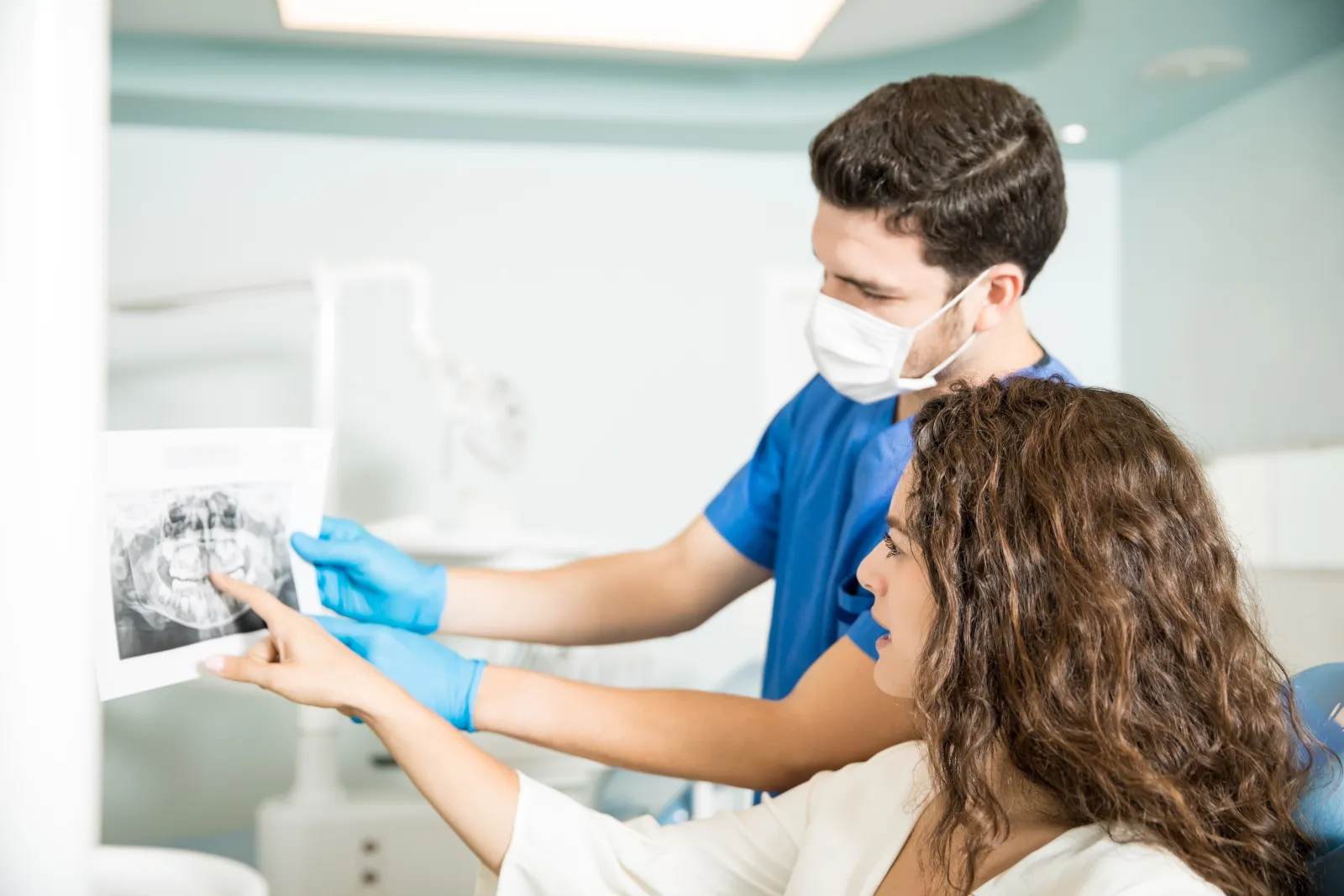
The exam
The exam is where the dentist checks every tooth, your gums, your bite, and the soft tissue in your mouth, including a check for anything unusual on your tongue, cheeks and throat. For a new patient, this is a comprehensive exam, which takes longer than a routine one because there is no history to compare against. The dentist is building a baseline.
The X-rays
X-rays show what the eye cannot: decay between teeth, problems under old fillings, bone levels around teeth, infections at the root tip, and wisdom teeth that have not come in. A new patient often needs a fuller set so the dentist can see the whole mouth. Returning patients usually need fewer, taken on a schedule that matches their risk. Modern digital X-rays use a very low dose of radiation.
If you have recent X-rays from another dentist, ask that office to send them over. If they are recent enough and clear enough, you may not need to repeat them, which can lower the cost of the visit.
The cleaning
A routine cleaning removes plaque and hardened tartar from above and just below the gumline, then polishes the teeth. It is meant for gums that are healthy or only mildly irritated. If the exam shows deeper gum pockets, bone loss or heavy buildup below the gums, a routine cleaning is not enough, and the dentist may recommend a deep cleaning instead. That is a different procedure and is priced differently. We explain the difference between a deep cleaning and a regular cleaning in a separate article.
What makes one visit cost more than another?
Two people can walk in on the same day and leave with different bills, even with no treatment done. These are the usual reasons:
New versus returning patient. A first visit includes a comprehensive exam and usually a fuller set of X-rays. Later check-ups tend to be simpler.
The type of X-rays. Bitewings (the small films that show the back teeth) are the most common. A full-mouth series or a panoramic X-ray covers more and takes more time. The dentist chooses based on your age, history and symptoms, not a fixed routine.
The type of cleaning. A routine cleaning, a deep cleaning (scaling and root planing), and a cleaning for someone who has not been seen in many years with heavy buildup are three different procedures. Which one you need depends on what the exam finds in your gums, not on preference.
A problem-focused visit. If you come in because of pain, a cracked tooth or swelling, the visit is built around that one problem. It usually includes a focused exam and an X-ray of that area, and sometimes the first step of treatment to get you comfortable.
Time since your last visit. This is the one people do not expect. If it has been several years, there is often more tartar to remove and more to check. Regular visits tend to keep each visit simpler.
What happens if the dentist finds something?
If the exam or X-rays show a problem, the dentist explains what was found, shows you where it is on the X-ray, and tells you how urgent it is. You then get a written treatment plan with the cost of each item before anything is scheduled.
You do not have to decide in the chair. Most findings fall into one of three groups:
- Urgent: an infection, a broken tooth, or a cavity close to the nerve. These are worth treating soon, because they tend to get more involved and more costly with time.
- Soon: small cavities or early gum problems that are not causing pain yet but will keep progressing.
- Can wait: things worth watching, or cosmetic choices that are entirely up to you.
That sorting matters when you are paying out of pocket. It lets you treat what matters most first and plan the rest around your budget, instead of feeling you have to do everything at once.
How do I get a quote before my visit?
The simplest way is to contact the office before you book and ask what a new-patient visit includes and what it costs without insurance. Our front desk can tell you what is part of a standard first visit and what would only be added if the dentist finds something.
A few things make the quote more accurate:
- Tell us if you are in pain or have a specific problem, so we know whether to plan a problem-focused visit
- Mention when you last saw a dentist and whether you have recent X-rays
- Say if you have any dental plan at all, including a discount plan or a PPO through a spouse
What no office can give you over the phone is the cost of treatment you might need, because nobody knows yet whether you need any. That part comes after the exam, as a written estimate.
Ways uninsured Fresno patients keep the bill manageable
Not having insurance does not mean you have to put dental care off. These are the approaches that work best for our uninsured patients in Fresno.

Keep up with check-ups. It sounds obvious, but it is the biggest one. A cavity found early is a small filling. The same cavity found two years later can be a crown or a root canal. Regular visits are the least costly dental care there is.
Stage your treatment. If you need several things, we can put the urgent work first and spread the rest across later visits. This involves no interest and no application, just a plan.
Use financing for larger work. We accept CareCredit, which lets qualifying patients spread the cost of bigger treatment over monthly payments, often with a promotional period that carries no interest. Read the terms on any financing carefully, especially what happens if the balance is not paid off within the promotional window. Here is how payment plans work at our office.
Ask about the order of treatment. Sometimes there is more than one reasonable way to fix a problem. It is fair to ask the dentist what the options are and how they compare over the long run, not just today.
For a broader look at your options, see our guide to keeping dental care affordable in Fresno.
Saturday visits so you don’t lose a day’s pay
For many people without dental insurance, the hidden cost of a dental visit is the time off work. A weekday morning appointment can mean losing hours of pay, which adds to the cost of the visit itself.
We are open Saturdays from 8:30 to 4, as well as weekdays from 8:30 to 5. Exams, X-rays, cleanings and many treatments can be done on a Saturday, so the visit fits around your job instead of the other way round. You can read more about our Saturday appointments, which tend to fill up early.
Frequently asked questions
Do I have to agree to treatment at my first visit?
No. A first visit is for finding out what is going on. You can have your exam, X-rays and cleaning, take your written treatment plan home, and decide later. Nobody should pressure you into booking anything on the spot.
Why do X-rays change what a first visit costs?
Because the number and type of X-rays depend on your mouth. Someone with no symptoms and recent X-rays from another office may need very few. Someone who has not been seen in years, or who has pain, may need a fuller set or a panoramic view. Sending recent X-rays from your previous dentist can sometimes reduce what is needed.
Is a deep cleaning billed differently from a regular cleaning?
Yes. A deep cleaning (scaling and root planing) treats gum disease below the gumline and is usually done one section of the mouth at a time, so it is a separate procedure from a routine cleaning. The dentist only recommends it when gum measurements and X-rays show it is needed, and will show you those measurements.
Can I find out the cost of a filling or crown before I come in?
Only roughly. The cost of treatment depends on the size and location of the problem, which the dentist cannot know without an exam and X-rays. After your exam, you get a written estimate for each item, so you know the total before any treatment starts.
Book your visit at One Dental Place
Visiting a dentist without insurance should not mean guessing what you will pay. Come in for an exam, find out exactly where your teeth stand, and leave with a clear written plan. If you have questions first, request a written estimate or read our no-insurance options page.
Dr. Gagan Sidhu, DDS
One Dental Place, 7045 N Chestnut Ave, Ste 104, Fresno, CA 93720
(559) 939-9000 · Mon–Fri 8:30–5 · Saturdays 8:30–4
Se habla español.